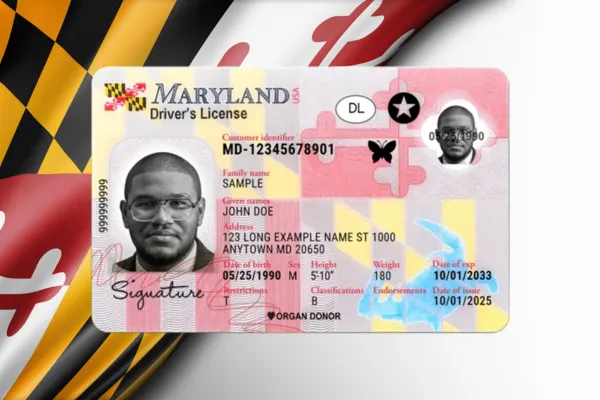
How to Obtain a Maryland State ID for a Homebound or Disabled Individual
Many families discover too late that obtaining a valid photo ID becomes complicated when a loved one is physically unable to leave their home or medical facility. Unfortunately, the process for homebound individuals is not clearly outlined on the Maryland Motor Vehicle Administration (MVA) website, which often leads to confusion, delays, and unnecessary stress.
After directly confirming the procedure with the Maryland Motor Vehicle Administration Homebound Services Unit, the guide below explains how the process works and how families can navigate it correctly the first time.
Who This Process Is For
This process applies to individuals who:
Are physically disabled, amputees, or medically confined
Reside in a nursing or long-term care facility
Receive in-home medical care
Cannot physically travel to an MVA branch
⚠️ This process applies only to Maryland State Identification Cards (non-driver IDs).
It does not apply to driver’s licenses.
Step 1: Contact the MVA Homebound Services Unit
A family member, caregiver, or trusted helper must contact the MVA Homebound Services Unit directly. The department will either email or mail a Homebound Application Packet.
📞 410-768-7442
🕒 Monday–Friday, 8:30 AM – 4:30 PM
This process is not fully documented online, so contacting the Homebound unit directly is required.
Step 2: Gather Required REAL ID Documents
The completed application packet must be submitted with original documents that meet REAL ID requirements.
Proof of Identity
Birth certificate or
Passport (must not be expired more than 5 years)
Proof of Social Security
Social Security card or
Social Security statement
Proof of Residency
If the individual lives in a nursing or care facility:
Letter of residency on official facility letterhead
If the individual receives in-home care:
Two proofs of Maryland address
📌 Photocopies and notarized “certified copies” are not accepted. Documents reissued by the original government agency are considered originals.
Step 3: Signing the Application
If the applicant can sign, they must sign the application themselves.
A general Power of Attorney is only required if the applicant cannot sign.
A Power of Attorney is not required simply to assist with scheduling, document submission, or appointment attendance.
Step 4: Photo Processing
If the applicant held a Maryland ID or license within the last 16 years, the MVA may reuse the photo already on file.
If it has been more than 16 years, the MVA Investigation Unit may contact the family or designated contact to arrange a photo appointment.
Step 5: Prior Out-of-State ID (Including Washington, DC)
If the applicant previously held a non-Maryland driver’s license or state ID:
The credential must be surrendered to Maryland
If the physical ID is lost, a driving record from the issuing state must be obtained instead
This applies even if the prior credential was a state ID rather than a driver’s license
The motor vehicle agency from the prior state can issue the required record.
Important Notes for Families
The Homebound ID process is not fully published on the MVA website
A credible witness used for notarization does not replace ID requirements
Families should expect follow-up communication from the MVA during processing
Maryland IDs are mailed only; they are no longer picked up in person
How The Signature Pros Can Help
Families often have the documents but lack the time, availability, or logistical support to manage the process. Based on direct confirmation from the MVA Homebound Services Unit, Power of Attorney is not required for scheduling or attending appointments when the applicant is able to sign.
The Signature Pros can assist by:
Explaining the Homebound ID process step-by-step
Helping organize and prepare required documents
Scheduling Homebound Services appointments on the applicant’s behalf
Attending appointments to submit paperwork and coordinate logistics
Coordinating with caregivers, nursing facilities, and family members
Notarizing supporting documents when appropriate
📌 The Signature Pros does not act as a legal representative or Power of Attorney and does not provide legal advice. Our role is administrative coordination and process support.
Frequently Asked Questions (FAQ)
(Confirmed directly with the Maryland Motor Vehicle Administration Homebound Services Unit)
⏱️ How long does the Homebound ID process take?
There is no guaranteed or fixed turnaround time for Homebound ID applications.
Once the application is approved and processed, the ID is typically mailed within 7–10 business days.
The MVA does not provide:
A best-case timeline
A worst-case timeline
A guaranteed completion date
Processing time varies depending on:
Whether all required documents are submitted correctly
Whether there are errors or omissions
How long internal processing takes for that specific case
📄 What documents are required?
Applicants must submit original documents, not copies.
Required documents include:
Proof of Identity
Birth certificate or
Passport (must not be expired more than 5 years)
Proof of Social Security
Social Security card or
Social Security statement
Proof of Residency
Nursing or care facility residents:
Letter of residency on facility letterhead
Individuals receiving in-home care:
Two proofs of Maryland address
If the applicant is homebound due to a disability, documentation may be required to support the request for homebound service.
Completed VR-210 Maryland Parking Placards/License Plates for Individuals with a Disability Form certified by a physician or qualified healthcare provider.
Click here to view the form
The applicant, or the applicant’s power of attorney, must also attest that the information provided regarding the applicant’s disability is true and that the disability claim is not being falsified.
❌ Are certified copies accepted?
No.
The MVA does not accept certified copies that were notarized.
Documents must be originals issued by the agency, including:
Reissued birth certificates from Vital Records
Reissued death certificates from Vital Records
A document reissued by the original government agency is still considered an original.
🏥 What must a nursing facility residency letter include?
The letter must be on official facility letterhead
It must state that the individual resides at the facility
No special wording or format is required
Most nursing or care facilities are already familiar with this type of request.
✍️ Who must sign the application?
If the applicant can sign, they must sign the application themselves
A Power of Attorney is not required if the applicant is able to sign
A Power of Attorney is only required if the applicant cannot sign the application
📬 Who can submit the paperwork?
Anyone can submit the completed paperwork on the applicant’s behalf
The person submitting:
Does not need to be a Power of Attorney
Should be someone the applicant trusts with original documents
Documents are scanned and returned immediately and are not retained by the MVA.
📅 Who can schedule the appointment?
Anyone may schedule the appointment on behalf of the applicant
A Power of Attorney is not required to schedule an appointment
🪪 Who can attend the appointment?
If the applicant cannot physically attend:
Any trusted person may attend the appointment on their behalf
A Power of Attorney is not required for attendance alone
A Power of Attorney is only required if the applicant cannot sign
🧑⚖️ When is a Power of Attorney required?
A Power of Attorney is required only when:
The applicant is unable to sign the application themselves
A Power of Attorney is not required for:
Scheduling appointments
Submitting paperwork
Attending appointments
Communicating with the MVA
🆔 Does it take longer if the applicant hasn’t had a Maryland ID in 16+ years?
No.
The length of time since the applicant last held a Maryland ID does not affect processing time
The process is the same regardless of how long the ID has been expired or absent
🚫 Can the ID be picked up in person?
No.
Maryland IDs are no longer issued over the counter
All approved IDs are mailed directly to the applicant
📦 Is there a way to check the status of the application?
Yes.
There is no online tracker
To check status:
The applicant or a family member must call the Homebound Services Unit
Staff can confirm whether the ID has been processed or mailed.
⚠️ What most commonly delays Homebound ID applications?
The most common issues are:
Missing required documents
Documents lost in transition
Applicants not realizing a document was required
There are no seasonal delays related to holidays or time of year.
ℹ️ Why isn’t this information on the MVA website?
The Homebound ID process:
Is not fully published online
Requires direct contact with the Homebound Services Unit for instructions
📌 Important Reminder
This guide explains the process only.
It does not replace legal advice or MVA authority, and requirements are subject to change.

